
Pattern Database
Fly tying patterns for trout water.
Fly tying patterns for trout water.
11 patterns
The Irresistible body style pairs with Adams coloring for an unsinkable attractor dry. Spun and clipped deer hair creates a body that floats like a cork through heavy pocket water.
Dave Whitlock's yarn-and-deer-hair hopper has been the standard against which hopper patterns are measured since the 1970s. A red deer-hair tail with a loop of yellow yarn over it, a clipped brown palmer over the yellow body, mottled turkey wing, knotted pheasant-tail kicker legs, and a spun deer-hair head with a trailing collar. No foam anywhere — it earns its float the traditional way.
The Goddard Caddis uses spun and clipped deer hair to create a tent-shaped body that is virtually unsinkable. Exceptional in fast, broken water where high flotation matters more than delicacy.
Carrie Stevens's 1924 masterpiece, tied to imitate the smelt of Maine's Rangeley lakes and still the most famous streamer in America. An orange floss body under gray saddles, golden pheasant crests, white bucktail, and a silver pheasant shoulder — a fly worth tying slowly and fishing with conviction.
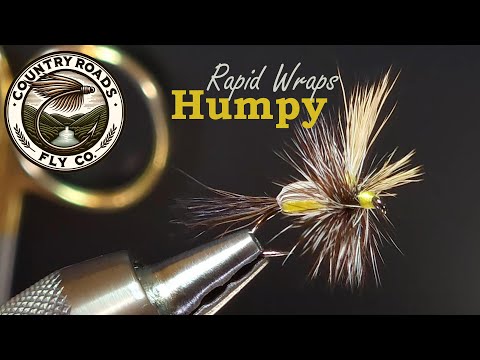
The Humpy is one of the most recognizable Western attractor dry flies. The deer hair hump traps air for unsinkable flotation, making it perfect for rough freestone pocket water. Yellow suggests stoneflies and caddis; red is a general attractor; the Royal Humpy adds the peacock-floss-peacock body of the Royal Coachman.
Randall Kaufmann's big black stonefly nymph — the standard salmonfly imitation for forty years. Heavily weighted, biot-tailed, with three notched turkey wing cases over a picked-out black body, it crawls the bottom of heavy Western water where the giant stones live for years before they ever see the bank.
Don Gapen's Muddler Minnow is the prototype of the sculpin-imitating streamer. The spun deer hair head creates a large profile and a subtle wobble, making it one of the most versatile streamers ever tied.
The Rat-Faced McDougal pairs a spun-and-clipped deer hair body with white calf tail wings and ginger hackle. The deer hair body is nearly unsinkable — excellent in fast water where buoyancy beats precision.
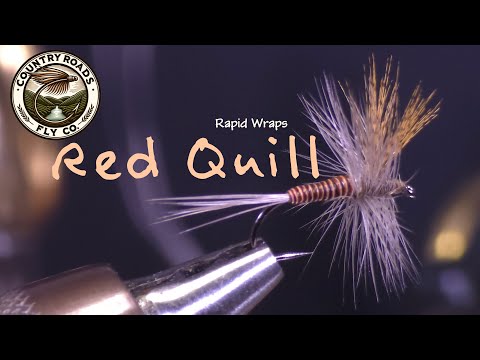
The Red Quill imitates the male Hendrickson natural — darker and smaller than the female, with a distinctive reddish-brown segmented body made from a stripped hackle quill. A Catskill classic as important as the Hendrickson itself.
The Royal Humpy pairs the Humpy's deer-hair hump with a red floss underbody and upright white calf-tail wings — the red flash below, the white wings above. A rough-water attractor you can track in any light, popularized by Jack Dennis's Western Trout Fly Tying Manual.
Kelly Galloup's neutrally buoyant sculpin — the fly that helped launch modern streamer fishing. The broad deer-hair head is left loose so the fly hovers and darts side-to-side on the strip instead of sinking away. Fished on a sinking line, banged off the banks, it hunts big browns.