Pattern Database
Fly tying patterns for trout water.
Fly tying patterns for trout water.
25 patterns
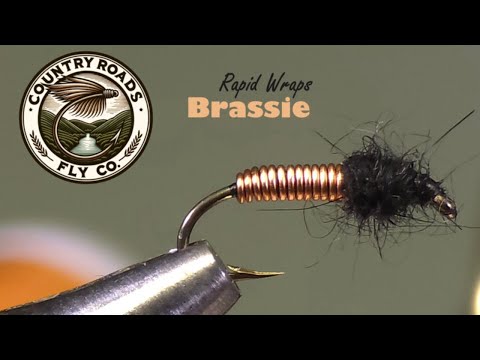
A midge larva pattern so simple and effective it transcends its humble origins. Copper wire builds a segmented, durable body that sinks fast. Add a peacock head and you have one of the great tailwater nymphs.
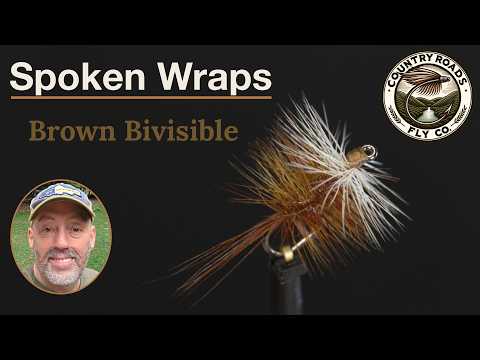
Edward Hewitt's all-hackle floater: brown hackle palmered nose-to-tail, finished with white turns at the front — visible to the fish (bi-) and to you (-visible). No body, no wing, nothing to sink. Skate it, drift it, drown it and fish it wet; the Bivisible has been un-killable since the 1920s.
John Crowe's deer hair beetle is the original no-foam beetle, and it could hardly be simpler: one bunch of black deer hair tied in at the bend, pulled over the top as a shell, and clipped. A few fibers pulled out to each side make the legs, and the clipped butts form the head. Durable, buggy, and still deadly whenever beetles are near the water.
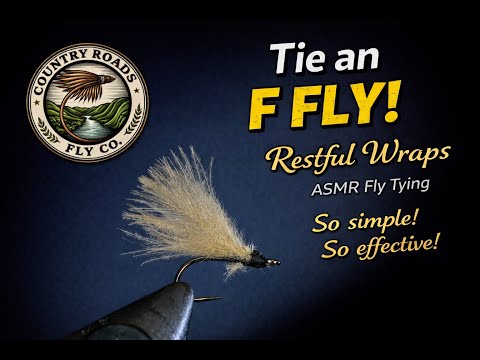
The F-Fly was developed in Europe as a highly impressionistic mayfly and midge imitation, designed specifically for pressured trout and technical water. Rather than imitating exact details, the pattern relies on profile, posture, and movement—key triggers that trout respond to when insects are trapped in the surface film. Using only CDC for the wing, the F-Fly excels at riding low, mimicking spent or emerging insects that trout feed on confidently. Its simplicity allows it to match a wide range of small mayflies and midges, making it a favorite on spring creeks, tailwaters, and slow glides. The F-Fly's minimalist design and effectiveness have earned it a permanent place among modern dry-fly staples. This ultra-simple recipe creates a low-riding silhouette with exceptional natural movement—perfect for selective trout feeding in calm, clear water.
Beetles are the most abundant terrestrial insect group, and trout eat them all summer. This simple foam pattern with a peacock herl underbody is one of the most underrated searching patterns for warm-weather dry-fly fishing.
The egg fly, perfected in the 1970s on California's Sacramento tributaries. Spun-and-flared egg yarn clipped to a perfect orb, with an optional contrasting blood dot. During any spawn — suckers in spring, browns and brookies in fall — drifting eggs are simply what the river serves.
Southwestern Pennsylvania's gift to everyone who just wants to catch trout: a chartreuse chenille loop tail and a chartreuse chenille body. Inchworm, caddis larva, egg — the fish decide, and in Appalachian freestone water they decide fast. No apologies necessary.
Inch worms drop from overhanging trees onto streams in spring and early summer, and trout key on them heavily. A bright chartreuse-green body on a hook is all it takes — simplicity at its best.
The little black stoneflies (Capnia and Allocapnia) are the first dry-fly action of the year — small dark stones crawling and fluttering on late-winter afternoons. A slim black body, a low dark wing, and a few turns of black hackle are all it takes; presentation matters more than precision this early.
The subsurface half of the early black stonefly hatch. Little black stone nymphs migrate toward the banks before crawling out, and a slim black nymph drifted along the edges in February and March is often the first productive nymphing of the year.
Pat Dorsey's South Platte staple, named for the silver-lined glass bead that glints like the gas bubble of an emerging midge. White thread and a copper rib — that's the entire fly, and on technical tailwaters it is quietly devastating.
A strand of mop chenille on a hook. Purists grimace, fish do not: the fat, translucent finger reads as a crane fly larva or a grub, and it has won enough competitions that nobody laughs anymore. Chartreuse and cream are the standards; fish it like any heavy nymph.
A micro-zonker that fishes like a nymph and swims like a streamer. One strip of pine squirrel — finer and livelier than rabbit at small sizes — plus a bead, and you have the most dependable small leech going. Dead-drift it under an indicator, then let it swing.
Lance Egan's flashy attractor nymph — a wrapped pearl-flash body, pheasant-tail whisks, and a hotspot of rainbow-blend dubbing under a silver bead. It imitates nothing and out-fishes nearly everything, particularly on pressured tailwaters where fish have seen every natural.
The Bighorn's famous sowbug, named because it is so simple even a blind man could tie it — and so effective nobody minds the joke. Three materials: ostrich herl for the legs-everywhere silhouette, a pearl flash back, and a red thread head as the trigger.
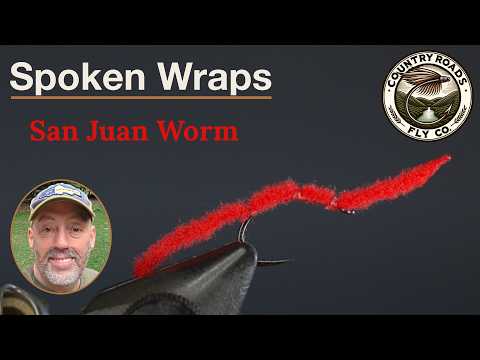
Named after the San Juan River in New Mexico, this simple worm pattern represents aquatic worms that get dislodged in high water and during runoff. Controversial in some circles, devastatingly effective in all circles. Red is the most popular color, but pink and wine produce on pressured fish.
Freshwater shrimp are the protein base of every weed-rich tailwater and spring creek, grazed on all year with no hatch required. A curved shaggy body under a clear shellback, ribbed into segments — tie it olive and tan for every day, orange for the dead-drifting 'cooked' scuds below dams.
The Madison River's twisted-yarn midge, popularized by Blue Ribbon Flies. A cord of twisted Z-Lon makes the segmented abdomen; a clipped tuft of deer hair makes the emerging wing bud. Red, olive, and brown, sizes 16–20, cover most of what a Western river calls midges and small caddis.
Controversial in some circles and devastating in all of them, the Squirmy Wormy uses a silicone worm material that moves seductively in current. Particularly effective in high, off-color water after rain when actual aquatic worms wash into the stream.
Peacock herl and a tiny iridescent starling hackle — the small dark soft-hackle for smutting fish. When trout are on little black stuff and refusing everything, a size 18 Starling & Herl swung or dead-drifted in the film is the old, quiet answer.
The mid-Atlantic's egg cluster — rows of soft yarn loops suggesting a drifting clump of sucker eggs. Born in Pennsylvania steelhead country and equally at home on Appalachian trout streams every spring when the suckers run gravel. Cream and orange, dead-drifted on the bottom.
Fran Betters's Ausable River fly, named for his answer when asked what they were biting on. Nothing but snowshoe hare's foot — tail, wing, and the rusty-cream underfur dubbed for the body — on hot orange thread. It floats like a cork through pocket water, refuses to sink, and imitates whatever the fish decide it is.
Dorsey's emerging-midge companion to the Mercury Midge: dark brown body ribbed with white thread, a rusty dubbed thorax, and a stub of bright white wing material breaking the profile — the pupa at the moment of eclosion. A first-string dropper on any winter tailwater rig.
Walt Young's impossibly simple nymph — just a curved hook and rough hare's ear dubbing. The shaggy, segmented appearance imitates sowbugs, caddis larvae, or whatever the fish imagine it to be.
Ted Welling's Zebra Midge is the go-to tailwater midge larva pattern. Two materials — thread and wire — tied on a beaded hook. Deceptively simple and devastatingly effective.