
Pattern Database
Fly tying patterns for trout water.
Fly tying patterns for trout water.
23 patterns
The Irresistible body style pairs with Adams coloring for an unsinkable attractor dry. Spun and clipped deer hair creates a body that floats like a cork through heavy pocket water.
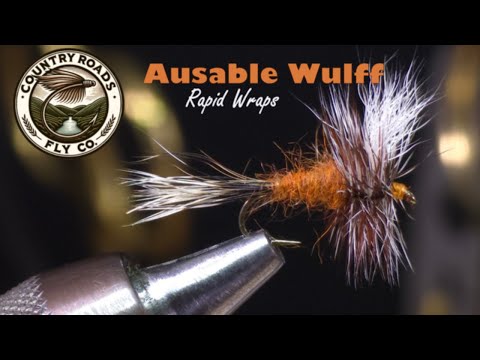
Fran Betters' Adirondack attractor is one of the great regional dry flies. The rusty/orange body and stark white wings are visible in any water, and the wide-hackle float makes it bulletproof in the pocket water of the Ausable River.
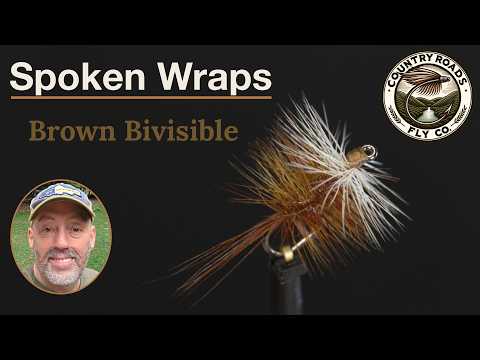
Edward Hewitt's all-hackle floater: brown hackle palmered nose-to-tail, finished with white turns at the front — visible to the fish (bi-) and to you (-visible). No body, no wing, nothing to sink. Skate it, drift it, drown it and fish it wet; the Bivisible has been un-killable since the 1920s.
The Chernobyl Ant is an indestructible foam attractor that works as a hopper, stonefly, or large ant imitation. Its flat profile, rubber legs, and high-visibility indicator strip make it the ultimate dry-dropper indicator fly.
The H&L Variant — famous as President Eisenhower's favorite fly — is a high-floating Western attractor built to stay visible. White calf-tail wings and tail flank a split peacock body: stripped quill on the rear half, full peacock herl at the thorax, finished with brown hackle. In fading light or broken water, the white wings are the last thing you lose sight of.
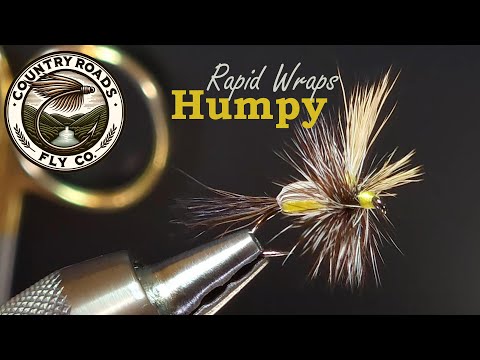
The Humpy is one of the most recognizable Western attractor dry flies. The deer hair hump traps air for unsinkable flotation, making it perfect for rough freestone pocket water. Yellow suggests stoneflies and caddis; red is a general attractor; the Royal Humpy adds the peacock-floss-peacock body of the Royal Coachman.
Pat Barnes' Sofa Pillow improved with a palmered body hackle for extra flotation. One of the premier golden stonefly adult imitations in Western fly fishing — large, buoyant, and visible in heavy current.
Wayne "Buz" Buszek's King's River Caddis, born on California's Kings River in the 1950s, is the archetype of the turkey-wing caddis dry. A shaggy tan fur body, a single mottled turkey quill wing tied tent-style over the top, and an undersized brown collar hackle that lets the fly sit low with the wing parallel to the water.
Doug Swisher's bullet-head rubber-legs attractor. One bunch of deer hair supplies tail, back, and the folded bullet head; white rubber legs cross at the sides in the X that names the fly. Hopper, stonefly, general commotion — pounded along grassy banks it draws the year's most emphatic eats.
A classic attractor streamer with a bright red-yellow-yellow bucktail wing that has been enticing trout, bass, and landlocked salmon for over 80 years. Simple to tie and surprisingly effective.
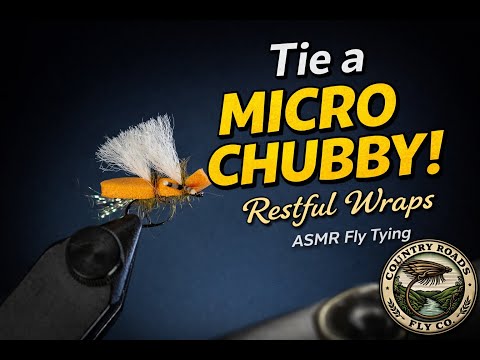
The Micro Chubby is a modern refinement of Chubby-style attractor dry flies, which trace their lineage back to the iconic Chubby Chernobyl. While the original Chubby was intentionally oversized to imitate stoneflies and hoppers, anglers quickly learned that trout often respond better to a smaller, cleaner silhouette—especially on pressured water. By downsizing the profile while keeping the core elements—foam buoyancy, rubber legs, and a visible body—the Micro Chubby excels as a searching dry fly, a terrestrial imitation, and a highly effective hopper-dropper indicator fly. Its ability to float heavy droppers while remaining subtle enough for selective trout has made it a staple in modern fly boxes.
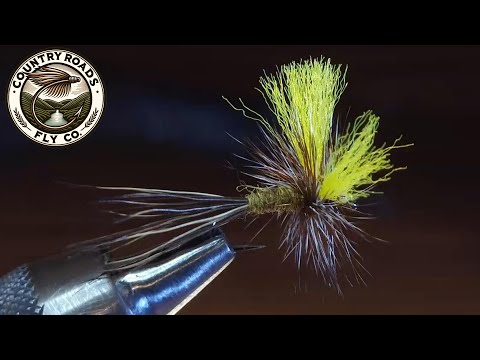
Harry Murray's Shenandoah Valley classic. An essential attractor dry fly for Appalachian mountain streams, built to ride fast freestone water all day long.
A heavily weighted stonefly nymph that gets to the bottom fast and stays there — the standard anchor fly on Western freestone rigs. A variegated chenille body with three pairs of living rubber legs, plus leg-material tail and antennae, wiggling at drift speed. Crude at the vise, lethal in the water.
Doug Prince's classic nymph is one of the best searching patterns in freshwater fishing. The white biot wings, peacock body, and brown hackle suggest a stonefly nymph but work when nothing specific is hatching.
Lance Egan's flashy attractor nymph — a wrapped pearl-flash body, pheasant-tail whisks, and a hotspot of rainbow-blend dubbing under a silver bead. It imitates nothing and out-fishes nearly everything, particularly on pressured tailwaters where fish have seen every natural.
The Rat-Faced McDougal pairs a spun-and-clipped deer hair body with white calf tail wings and ginger hackle. The deer hair body is nearly unsinkable — excellent in fast water where buoyancy beats precision.
Taylor Williams' Renegade is unlike any other fly — a brown hackle collar at the rear, peacock herl body, and white hackle collar at the front. It imitates nothing specific and attracts everything. One of the great Western searching patterns.
The Royal Humpy pairs the Humpy's deer-hair hump with a red floss underbody and upright white calf-tail wings — the red flash below, the white wings above. A rough-water attractor you can track in any light, popularized by Jack Dennis's Western Trout Fly Tying Manual.
The Royal Coachman colors in a down-wing trude silhouette — peacock and red floss under a swept white calf wing. Reads as caddis, small stone, or nothing in particular; visible at forty feet in chop; and quietly one of the best attractor dries the West ever standardized.
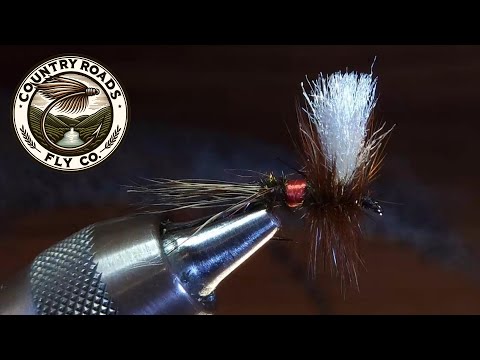
Lee Wulff's iconic attractor dry fly. The peacock-red-peacock body makes it visible in rough water, and white calf tail wings make it easy to see from a distance. One of the most recognizable flies ever created.
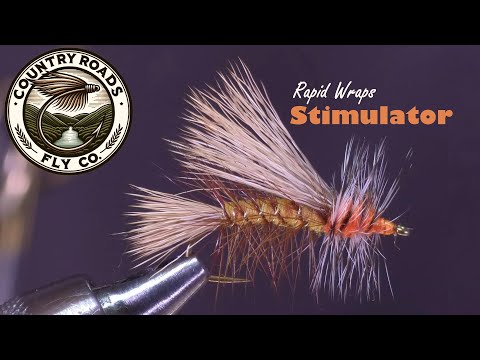
Randall Kaufmann's Stimulator is the king of attractor dry flies for Western-style fast water. Its elk hair wing, palmered hackle, and bold body trigger strikes on everything from trout to steelhead. Yellow imitates Yellow Sallies and small stoneflies; orange targets Golden Stones and Salmonflies; chartreuse and tan serve as general attractors.
Guy Turck's 1990 Jackson Hole One Fly winner — the attractor that ate the West. Golden pheasant tippet tail, hare's ear body, a calf-and-flash wing under a spun deer muddler head, rubber legs off the sides. Floats a dropper all day, gets eaten on its own all evening.
One of the oldest American wet fly patterns, the Woolly Worm predates the Woolly Bugger by decades. The palmered hackle over a chenille body suggests a caterpillar, stonefly nymph, or leech depending on how it's fished.