
Pattern Database
Fly tying patterns for trout water.
Fly tying patterns for trout water.
29 patterns
John Barr's BWO emerger, designed in the 1970s and a tailwater staple ever since. A drab, flush-riding pattern: stiff brown hackle fibers imitate the trailing shuck, a slim olive-brown abdomen suggests the nymph, and a dark dun wing case pulled over the thorax — its leftover tips swept back as legs — captures the dun struggling free of the shuck.
The parachute style BWO is one of the most important dry flies in a trout angler's box. The flush-floating wing and horizontal hackle present a perfect silhouette for selective fish on flat water.
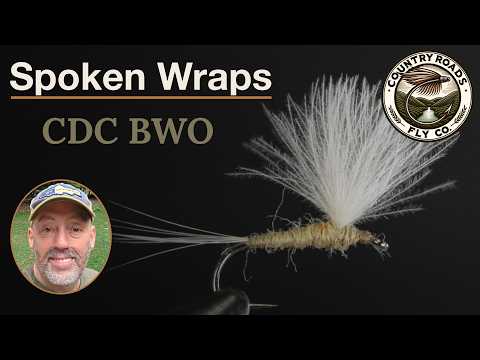
A minimalist CDC dry that relies on the feather's natural oils to float flush in the surface film. No hackle means a perfect flush silhouette on still water — exactly what selective tailwater fish demand during BWO hatches.
A flush-floating CDC caddis dry that lets CDC's natural water resistance do the heavy lifting. Effective on slow water where standard caddis patterns sit too high and create refusals. Tan and gray match Spotted Sedge and similar summer species; olive and green cover Grannom and Green Rock Worm hatches in spring.
A simple, deadly BWO emerger relying on CDC's natural water-shedding oils to float the fly in the film. The trailing Z-Lon shuck suggests a dun that never quite made it out, which is exactly what selective trout want to eat.
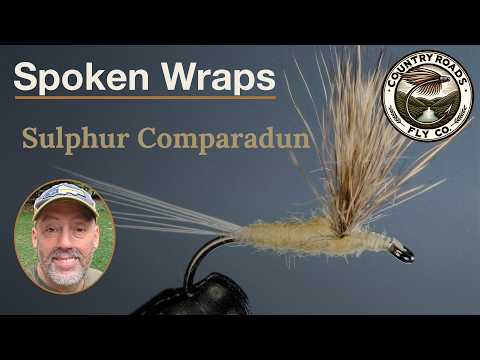
Al Caucci and Bob Nastasi's Comparadun concept changed dry-fly design. The fanned deer hair wing sits flush in the film like a natural, and the split tail provides perfect balance without hackle.
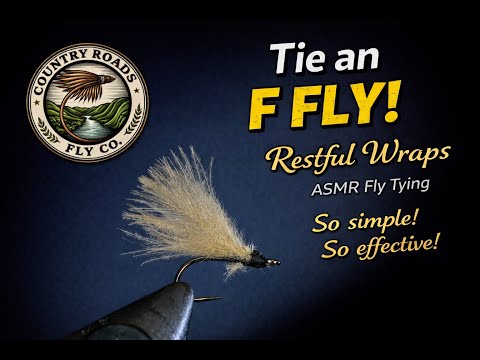
The F-Fly was developed in Europe as a highly impressionistic mayfly and midge imitation, designed specifically for pressured trout and technical water. Rather than imitating exact details, the pattern relies on profile, posture, and movement—key triggers that trout respond to when insects are trapped in the surface film. Using only CDC for the wing, the F-Fly excels at riding low, mimicking spent or emerging insects that trout feed on confidently. Its simplicity allows it to match a wide range of small mayflies and midges, making it a favorite on spring creeks, tailwaters, and slow glides. The F-Fly's minimalist design and effectiveness have earned it a permanent place among modern dry-fly staples. This ultra-simple recipe creates a low-riding silhouette with exceptional natural movement—perfect for selective trout feeding in calm, clear water.
Ed Shenk's all-black companion to his Letort Hopper, built for the same demanding limestone flats. Black fur body, black quill wing tied flat, black deer-hair head with trailing collar — no hackle, no flash. On late-summer spring creeks a cricket often out-fishes the hopper it shadows.
Ed Shenk's Letort Hopper was built for the flat, glassy limestone water of Pennsylvania's Letort Spring Run, where a bushy hopper draws refusals. It has no hackle at all: a yellow fur body, a flat mottled turkey wing, and a spun deer-hair head whose tips sweep back as a collar. The low, flush profile is the whole point.
The loop wing — a style pioneered by André Puyans in the 1960s and since adapted to CDC by many fine tiers — traps air and floats in the film with a naturalistic silhouette. The looped CDC suggests a dun wing just pulling free of the shuck, which is exactly what selective fish key on.
The Pale Evening Dun imitates the evening-active pale mayflies — sulphurs and PMDs — that hatch in the last hour of light. A cream or pale yellow body and dun wings are essential for the selective fish these hatches produce.
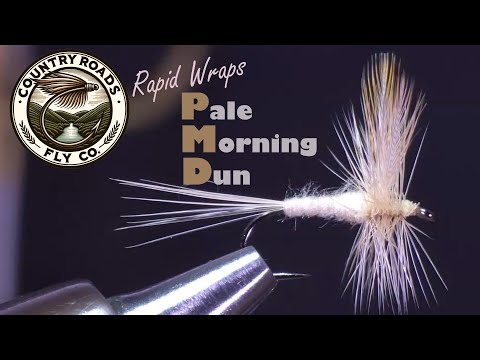
The PMD is one of the most important Western hatches and increasingly common in the East. Its pale yellow-olive body and upright dun wings demand a precise imitation for selective trout on spring creeks and tailwaters.
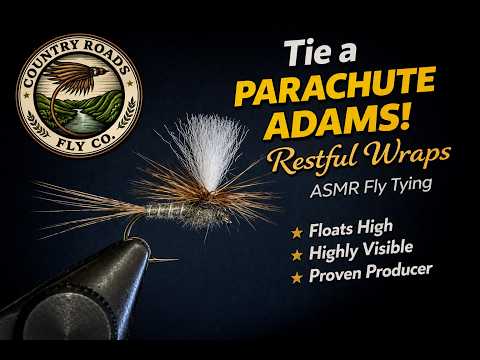
The Adams was created in 1922 by Leonard Halladay of Mayfield, Michigan, tied for his friend Charles F. Adams. It was built as a general mayfly impression rather than a match for one specific hatch, and that versatility is why it has never left anyone's box. The parachute version came later, winding the hackle flat around an upright post instead of around the shank. It sits the fly lower and shows a crisper wing profile from below — a small change that makes a real difference on selective fish.
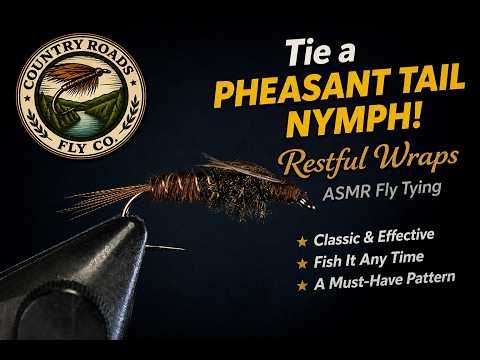
The Pheasant Tail was developed by English riverkeeper Frank Sawyer in the mid-20th century for the chalk streams of the River Avon. Sawyer's original used only pheasant tail fibers and fine copper wire — no thread at all — to imitate the baetis nymphs his trout were feeding on. The American version, often credited to Al Troth, added a peacock herl thorax and a defined wing case and legs. That's the dressing most tiers know today, and it's the one we're tying here.
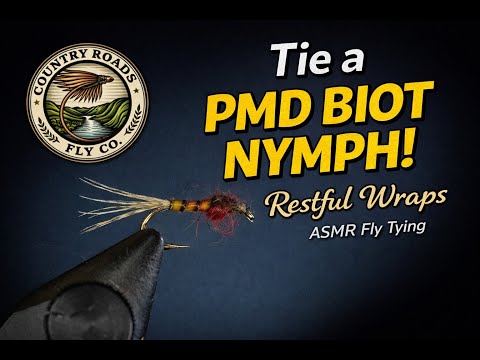
The PMD Biot Nymph is designed to imitate the nymphal stage of Pale Morning Dun (PMD) mayflies, a prolific and important hatch on many Western and Eastern tailwaters. PMD nymphs are slim, active swimmers, and trout often key in on them heavily in the days leading up to—and during—the hatch. Using a goose biot abdomen gives this pattern its defining feature: crisp segmentation and a natural taper that closely matches the real insect. Combined with soft natural materials in the thorax and tail, the PMD Biot Nymph excels at imitating drifting and emerging nymphs in clear, technical water. This style of biot-bodied nymph has become a favorite among anglers who value realism over flash, especially when fishing pressured trout or subtle presentations. This refined material combination creates a slender, segmented profile with lifelike texture—ideal for PMD hatches and selective trout.
Bob Quigley's classic cripple pattern suggests a dun stuck half-in and half-out of its shuck — exactly the vulnerable stage that selective trout target. The Z-Lon trailing shuck and deer hair wing are signature features.
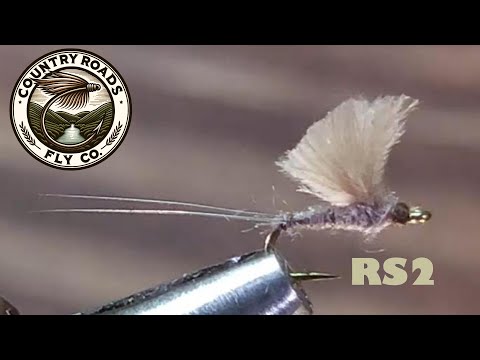
Rim Chung's impossibly simple tailwater nymph — gray dubbing and snowshoe rabbit wing, nothing more. The RS2 consistently outperforms more complex patterns on heavily pressured tailwaters where fish see everything.
The Rusty Spinner imitates the spent female of many important mayfly species — Hendricksons, Sulphurs, and Blue-Winged Olives all produce rusty-bodied spinners. Dead fish on the surface, and trout are absolutely locked on them.
Freshwater shrimp are the protein base of every weed-rich tailwater and spring creek, grazed on all year with no hatch required. A curved shaggy body under a clear shellback, ribbed into segments — tie it olive and tan for every day, orange for the dead-drifting 'cooked' scuds below dams.
A no-hackle CDC caddis designed for flat tailwater pools where drag and silhouette matter more than floatation. The sparse CDC wing sits naturally in the film while the dubbing body and Z-Lon shuck sell the imitation.
A flush-floating BWO emerger using snowshoe rabbit foot hair for the wing. Snowshoe hair is more water-resistant than most materials — it floats in the film naturally without floatant and creates a perfect silhouette. Exceptional during heavy BWO hatches.
Craig Mathews and John Juracek's Sparkle Dun pairs the Comparadun's fanned deer hair wing with a Z-Lon trailing shuck suggesting an emerging nymph. This combination triggers strikes during the most selective BWO hatches.
The Sparkle Dun tied to match the sulphur hatch. The trailing shuck and upright deer hair wing perfectly suggest a sulphur in the final stages of emergence — exactly what selective evening-rise fish demand.
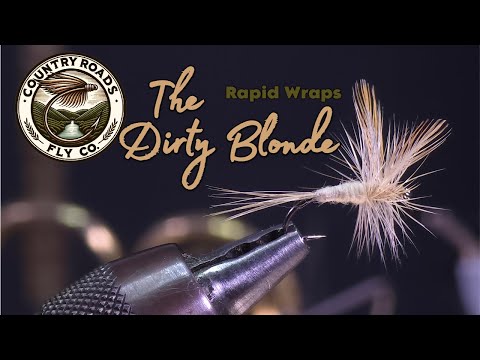
The Dirty Blonde is a versatile dry fly designed with subtle blonde tones, making it effective for imitating a variety of mayflies and caddisflies. Whether you're fishing a Pale Morning Dun hatch, a Light Cahill emergence, or general tan caddis activity, this pattern's pale yellow body and light ginger hackle give it broad appeal across seasons and water types.
Vince Marinaro's thorax style features a centrally-tied hackle clipped on the bottom that allows the fly to sit flat and natural in the film. For glass-smooth water during BWO hatches, few patterns are more effective.
The thorax style applied to the sulphur hatch. Clipping the bottom hackle fibers lets this fly sit naturally flat in the film during evening sulphur hatches when trout are inspecting every fly that drifts over them.
The Trico spinner fall is one of the most demanding hatches in trout fishing. Thousands of tiny spent spinners on the surface demand a small, accurate imitation. This pattern nails the black body and white spent wings.
R.S. Austin's Devon pattern (1890s), named for the famously secret pinkish dubbing from a tup — a ram. Yellow silk at the rear, a blush of pink mixture at the thorax, and blue dun hackle: the enduring pattern for pale wateries and other small light mayflies on smooth water.
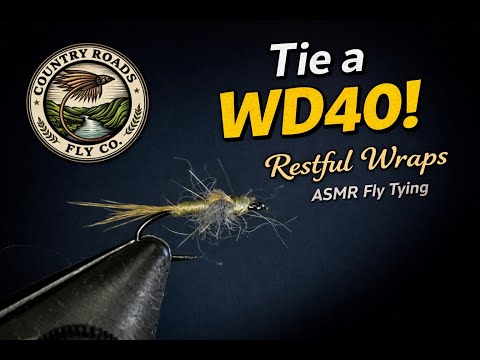
René Harrop's WD-40 is a masterclass in minimal fly design — wood duck legs, dubbing body, and snowshoe rabbit wing suggest a midge pupa or BWO emerger just below the film. One of the most effective tailwater nymphs ever created.